

Epoxy Grout, Epoxy Grout & Installation
What Adhesives Are Approved for Pool Tile Installations?

Oct
Understanding Pool Tile Adhesive and Its Importance
When it comes to installing tiles in swimming pools, selecting the right pool tile adhesive is essential for long-lasting durability and waterproofing. Using the proper adhesive ensures tiles remain firmly in place despite constant water exposure. This article explores the most reliable pool tile adhesive options, especially for installations in Montreal’s unique climate conditions.
The core function of a pool tile adhesive is to securely bond tiles to pool surfaces while resisting water damage and chemical effects. Unlike typical tile adhesives, these products are formulated to withstand continual immersion. Knowing which adhesive for pool tiles is approved can help avoid costly repairs later.
Different adhesive formulations have specific properties like resistance to chlorine, saltwater, and freeze-thaw cycles. It is important to understand these variations to maximize pool longevity. Choosing waterproof tile adhesive is a critical step which ensures the tiles remain intact under harsh water conditions.
For example, epoxy-based and polymer-modified cements are commonly recommended as best tile adhesive for pools due to their strong holding power and moisture resistance. In Montreal, where pools face both harsh winters and summer use, the proper adhesive must balance flexibility with toughness.
Recognizing the role of approved pool tile adhesives sets the stage for selecting the right products to maintain your pool’s aesthetic and structural integrity. Next, we will examine key characteristics required in these adhesives to meet local environmental demands.
Key Characteristics of Approved Pool Tile Adhesives
Pool tile adhesives used in Montreal pools must meet strict criteria to ensure long-lasting performance. Understanding these key traits will help in selecting the best materials suited to regional climatic variations and chemical exposures.
An approved pool tile adhesive must be waterproof and resistant to pool chemicals like chlorine and salt. This ensures it does not degrade or lose adhesion over time. It should also tolerate temperature fluctuations common in Quebec.
Another essential characteristic is strong bonding capability on diverse pool surfaces such as concrete, fiberglass, or plaster. This versatility in adherence prevents tile lifting that can occur due to water pressure and movement.
To further illustrate, waterproof tile adhesive options like epoxy enable the formation of a chemically resistant and watertight bond. These adhesives specifically address challenges from pool water compositions found in the Montreal area.
Ultimately, choosing tile adhesives for swimming pools based on these key features guarantees durability and safety. This understanding leads us to specific product recommendations widely recognized as effective in pool tile installations.
Top Approved Pool Tile Adhesives Recommended
 Epoxy Grout – Starlike Evo
Among many available options, several adhesives stand out as best tile adhesive for pools, validated by professionals and manufacturers. These selections reflect qualities required for Montreal’s swimming pool conditions.
Epoxy adhesives are highly regarded because of their superior waterproofing and chemical resistance. They create a permanent bond that withstands harsh pool environments. This makes epoxy glue a top choice among approved pool tile adhesives.
Other notable options include polymer-modified mortars, which combine flexibility and strength. These provide excellent adhesion on various substrates while accommodating slight movements or expansions due to temperature changes.
For instance, epoxy grout for pool tiles has been praised for its enhanced water repellency and stain resistance, making it a smart option for pools in colder climates like Montreal. More detailed information on this can be found here.
Identifying top-performing, waterproof tile adhesive is crucial in ensuring your pool tiles stay secure. Knowing these approved adhesives builds confidence for your installation project, as we will explore application techniques next.
Proper Application Techniques for Pool Tile Adhesive
 JointPoint
Correct application is as important as choosing the right pool tile adhesive. Faulty installation reduces the effectiveness of any adhesive, risking tile detachment and water damage.
Preparation of the pool surface is critical to ensure that the adhesive fully bonds. Surfaces should be clean, dry, and free of contaminants before applying adhesive for pool tiles. This stage sets the foundation for bond strength.
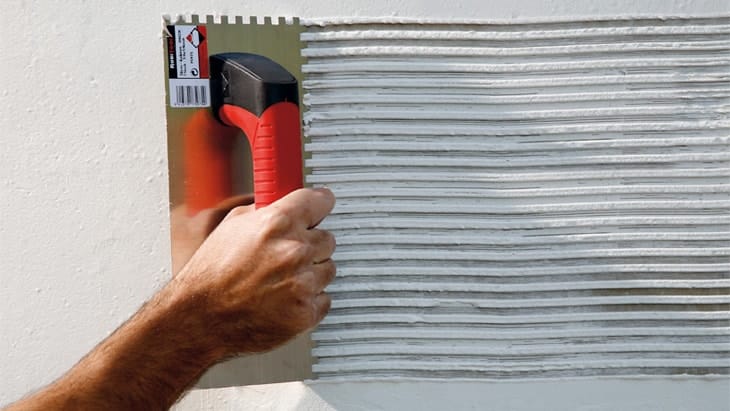
Applying the adhesive with proper tools, such as notched trowels, helps achieve uniform coverage and depth. It is advisable to work in sections and avoid letting adhesive dry out before tiles are placed.
For example, when using the best tile adhesive for pools, following manufacturer guidelines on curing times and environmental conditions, including temperature and humidity, improves results. This approach is especially important in the Montreal region, where seasonal changes affect drying and setting.
Following these application best practices ensures the durability and waterproof nature of tile installations. This leads us to important maintenance tips, which are vital for extending the lifespan of tiles attached with pool tile adhesive.
Maintenance and Longevity of Pool Tile Adhesive
Maintaining the integrity of your pool tile adhesive over time enhances both the appearance and function of swimming pools. Proper care prevents premature failure and costly repairs.
Regular inspection for cracks, chips, or loose tiles allows early detection of adhesive issues. Cleaning tiles with appropriate products keeps the adhesive bond protected from corrosive buildup.
In colder climates like Montreal, winterizing your pool by draining water to prevent freeze damage indirectly preserves the adhesive bond. The waterproof tile adhesive used can handle water exposure but extreme ice expansion poses risks.
Practical steps for maintenance include:
- Cleaning tiles with mild detergents to avoid chemical degradation.
- Checking grout and reapplying sealant as needed to protect adhesive edges.
- Promptly repairing any tile damage to keep the adhesive intact.
- Using products tested for Montreal pools to ensure local climate resilience.
- Scheduling professional evaluations to monitor adhesive condition over time.
Applying these practices safeguards the pool tile adhesive’s effectiveness, promoting long-term success. For detailed advice on compatible grout products, visit this internal resource. These insights conclude the comprehensive guide regarding approved pool tile adhesives in the context of regional needs.
